https://www.upi.com/Top_News/World-News/2026/02/02/higher-sugar-flour-despite-falling-raw-material-cost/3701770079037/
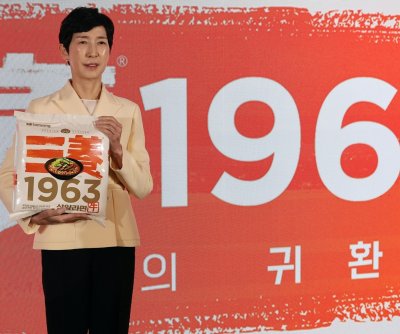
Kim Jung-soo, vice chief of Samyang Foods Inc., attends a publicity event to announce the launch Samyang 1963 a new product of ‘ramyeon,’ or instant noodles, that uses beef tallow, in Seoul, South Korea, 03 November 2025. File. Photo by YONHAP / EPA
Feb. 2 (Asia Today) — Criticism is growing that higher sugar and flour prices at Samyang Corporation boosted profits and dividends that ultimately benefited the Samyang Group’s controlling family, despite falling raw material costs.
Food manufacturing, including sugar and flour, accounts for nearly 60% of Samyang Corporation’s revenue. Although import prices for key raw materials began declining in 2023, the company continued raising product prices, driving sales growth and sharply increasing dividends to its largest shareholder, Samyang Holdings.
Samyang Holdings is controlled by members of the founding family, including Vice Chairman Kim Won, who together hold 41.95% of the holding company.
According to the Financial Supervisory Service, Samyang Corporation raised prices from 2023 even as import costs for sugar and wheat declined. Authorities found that the company engaged in flour price collusion totaling 5.9 trillion won (about $4.1 billion) from January 2020 to October 2025, and sugar price collusion totaling 3.2 trillion won (about $2.3 billion) from February 2021 to April 2025.
Sugar prices illustrate the pattern. The import price of raw sugar rose from $409 per ton in 2021 to $601 in 2023, prompting Samyang to raise its sugar selling price from 759,000 won per ton (about $523) in 2021 to 1.08 million won (about $750) in 2023.
However, in 2024, despite raw sugar import prices falling 8.2% year-on-year to $552 per ton, Samyang raised its sugar price again to 1.12 million won (about $775). By the third quarter of last year, raw sugar prices had dropped further to $487 per ton, yet Samyang’s selling price remained near 1.04 million won (about $720).
Flour pricing followed a similar trajectory. Wheat import prices jumped from $307 per ton in late 2021 to $435 in 2022, after which Samyang raised flour prices from 570,000 won per ton (about $392) to 742,000 won (about $511). But even after wheat prices fell to $380 in 2023 and later to $296 per ton, Samyang continued increasing prices, selling flour at 782,000 won (about $539) and later 661,000 won (about $455).
As a result, Samyang Corporation’s food division sales rose from 1.4 trillion won (about $1.03 billion) in 2022 to 1.5 trillion won (about $1.10 billion) in 2023, accounting for nearly 59% of total revenue. Sales remained elevated at 1.5 trillion won (about $1.09 billion) in 2024 and 1.1 trillion won (about $790 million) in the first three quarters of 2025.
Rising profits were accompanied by a sharp expansion in dividends. Samyang Corporation’s net profit increased from 55.8 billion won (about $38 million) in 2022 to 91.1 billion won (about $63 million) in 2023 and 89.3 billion won (about $61 million) in 2024. Over the same period, the dividend payout ratio rose from 25% to 35%, and dividends per share increased from 1,250 won (about $0.86) to 1,750 won (about $1.20).
Samyang Corporation paid total dividends of 22.4 billion won (about $15.4 million) to Samyang Holdings in 2023 and 2024. Holding a 61.83% stake, Samyang Holdings was the primary beneficiary.
At the holding-company level, Samyang Holdings paid dividends of 3,500 won per share (about $2.41) in 2024, totaling roughly 26 billion won (about $17.9 million). Dividends distributed to the owner family alone amounted to 10.9 billion won (about $7.5 million).
In response to criticism that profits generated through price coordination in essential food items ultimately flowed to the owner family via dividends, a Samyang Group official said the payouts reflect a long-standing shareholder-return policy and should not be directly linked to sugar or flour price movements.
— Reported by Asia Today; translated by UPI
© Asia Today. Unauthorized reproduction or redistribution prohibited.
Original Korean report: https://www.asiatoday.co.kr/kn/view.php?key=20260202010000725