https://www.economist.com/node/21803710?fsrc=rss%7Cbus
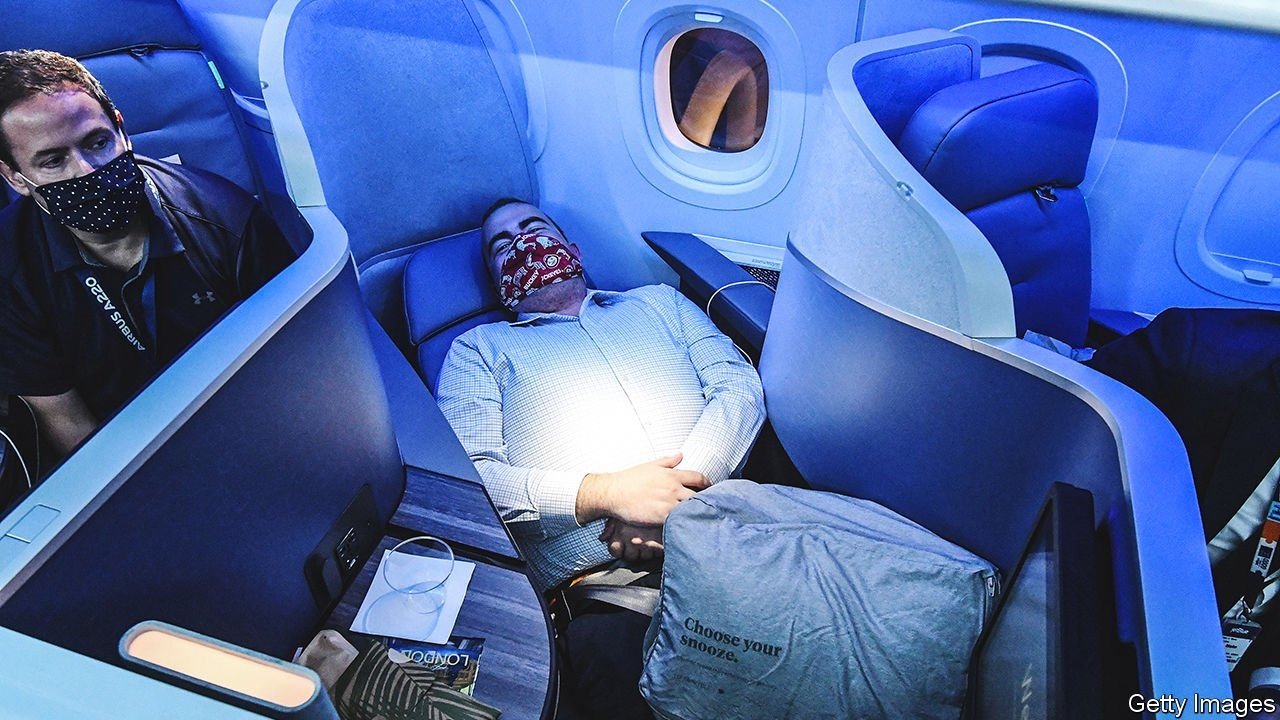
PERHAPS JETBLUE believes that the sky is darkest before dawn. On August 11th America’s sixth-biggest airline, known for its no-frills domestic services, launched its first transatlantic flights, between New York and London. The timing seems plucky. America has yet to follow European countries in lifting tough pandemic-era cross-border travel restrictions. Industry insiders think that long-haul travel will be the last sort to rebound. And low-cost intercontinental travel has historically been a tough business. Can JetBlue crack it?
The flight path of failure can be tracked from Freddie Laker’s Skytrain in the 1970s, via People Express, Tower Air and Air Berlin, to the more recent hard landings for Denmark’s Primera Air in 2018 and Iceland’s WOW in 2019. Norwegian Air Shuttle, which had captured a third of the worldwide low-cost-long-haul market, gave up on it in January, a victim of reckless expansion as much as of covid-19. Even survivors have little to shout about. Malaysia’s AirAsia X has made an annual pre-tax profit only twice since it went public in 2013.
Budget airlines have transformed short-haul flying by running simple point-to-point operations that eschew the hassle of connecting passengers across a complex network. They keep aeroplanes in the air for longer each day than full-service rivals do, fly from less…