https://www.economist.com/node/21803287?fsrc=rss%7Cbus
THE SUDDEN unavailability a decade ago of cars in “tuxedo black”, “rugged brown” or “royal red” highlighted the vulnerability of the industry’s global supply chain. The abrupt closure of the only factory making a vital pigment because of its proximity to the tsunami-hit Fukushima nuclear plant in Japan affected most of the world’s big carmakers. A side-effect of a global pandemic has denied carmakers a more vital component.
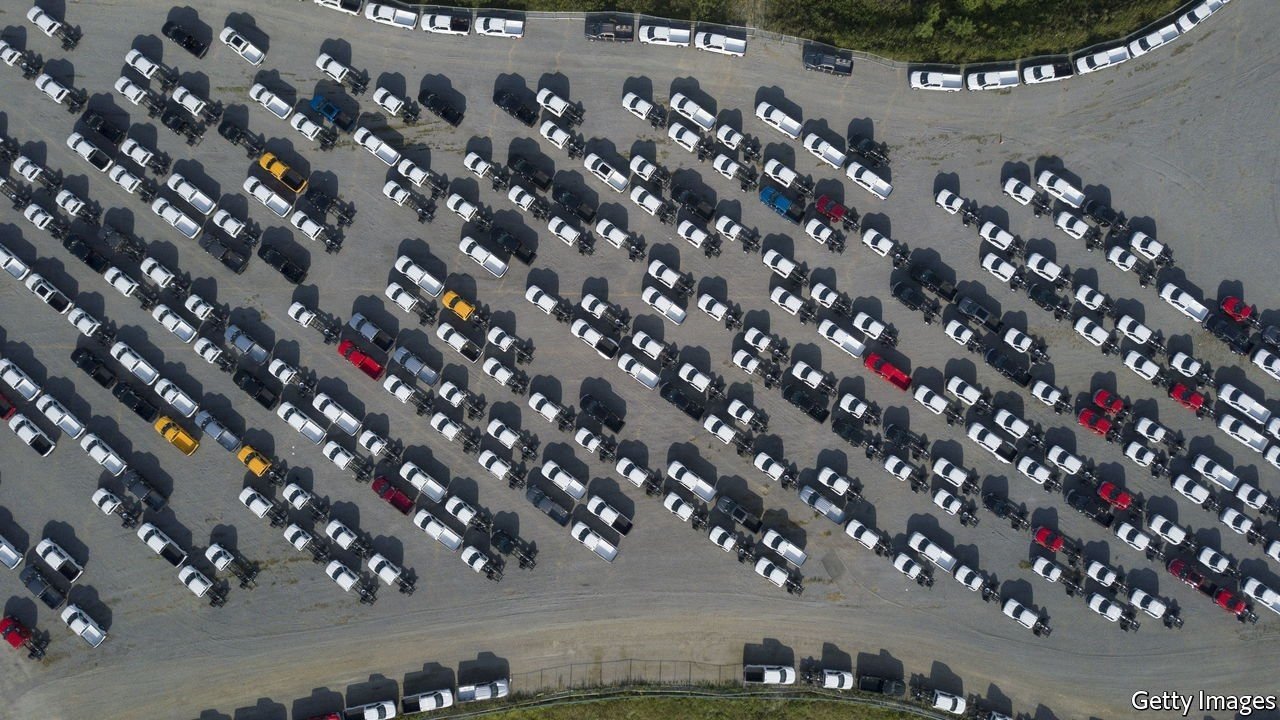
A shortage of semiconductors has left car firms unable to install the electronics that control entertainment systems, safety features and driving aids. Many have cut assembly-line shifts. Some have temporarily closed factories. Ferdinand Dudenhöffer of the Center Automotive Research, a German think-tank, reckons the bottlenecks will dent forecast worldwide production in 2021 by 5.2m cars, to 74.8m.
Ford’s net profit fell by half in the second quarter, year on year, mainly owing to the chip crunch. Jaguar Land Rover expects sales in the three months to September to be 50% lower than planned. On August 3rd Stellantis…